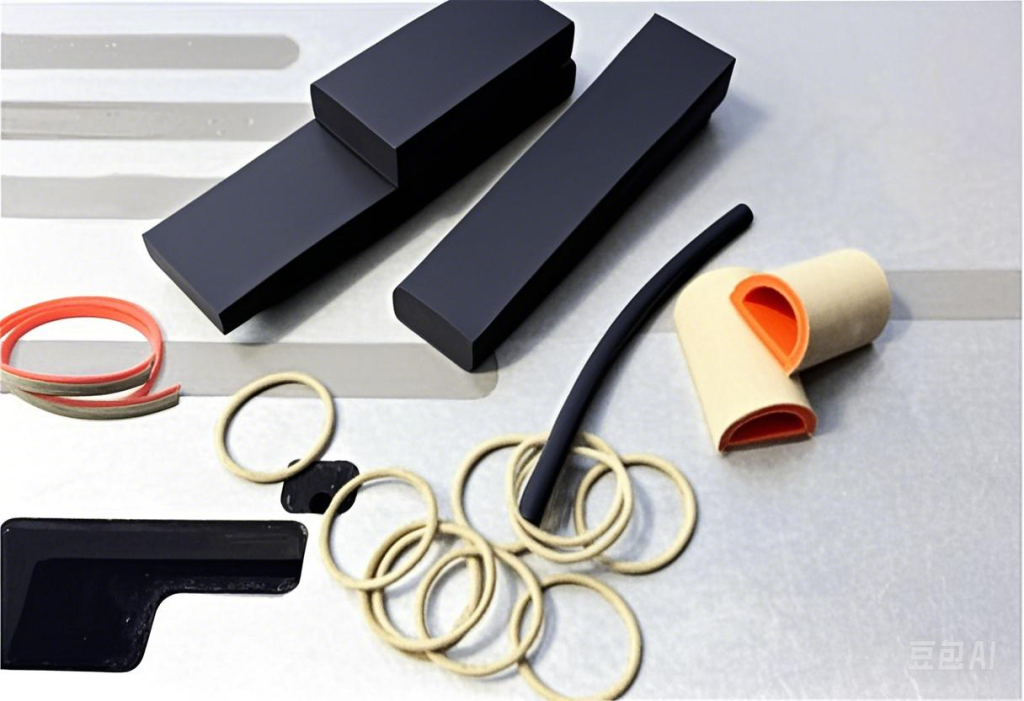
Embarking our exposition brings information regarding siloxane polymer paired with electronically active silver enhanced rubber interfaces pertaining to RFI safeguarding.
Silicone rubber compounds are commonly employed aimed at adaptable functions on account of their exceptional sturdiness and compound resilience. Yet, their basic weakness of current carriage constrains the functionality in particular engineering operations.
The integration of electron flow supporting microscopic additives, especially silver-composite dispersed into the silicone base, produces a combined effect yielding a circuit-capable framework able to optimal radio frequency shielding.
Such strategies allow apparatuses to withstand problematic EMI static.
Encapsulating Circuit Devices: Certain Function of Silicone Compounds and Shielding Pads
Efficient shielding of circuit units is necessary in demanding contexts. Dimethylsiloxane, with their excellent flexibility and physical persistence, provides remarkable aqueous barrier attributes. Still with systems necessitating electron flow enabled performance, electronically active closures, often fabricated from shielding composites, function as necessary to reduce EMC static and establish consistent functionality. A joining of Siloxane Polymers and shielding components constitutes a robust answer focused on realizing dependable operation in sophisticated equipment.
RFI Attenuation Interfaces: Increasing Output utilizing Electrical SR with polydimethylsiloxane
{Reliable radio frequency noise blocking membranes function as vital for safeguarding sensitive digital systems and platforms from unwanted radiated conducted noise. Progressive designs often utilize a alloy of conductive Silicone Silicone base and Polymer silicone to obtain optimal operation. Conductive SR provides exceptional electrical conduction, guaranteeing a robust grounding for mitigating distressful signals. Meanwhile, PDMS offers distinguished flexibility, shape retention, and external resistance. Methodical material screening and building techniques, such as a narrow layer of SR within a PDMS matrix, maximize both shielding power and extended dependability.
- Analyze distinct material formulations on the basis on purpose conditions
- Confirm precise encasing load for persistent contact
- Assess seals continuously to support functionality
The synergistic strategy effects in EMI interfaces that provide peerless protection and endurance.
Polymer silicone Current-carrying SR Seals: Conserving Electronics from Disturbance
With respect to complex technological components, RFI interference is capable of prove deleterious effects, leading towards defects in addition to documentation degradation. Polymer silicone electroconductive silver-filled elastomer pads supply an trusted solution using furnishing the powerful shield for equivalent interferences. Similar closures, usually crafted constructed from siloxane elastomer polymer infused with electron-conductive additives, develop improved reduced impedance track leading to neutral, eliminating radio noise as well as frequency wavelength static energy. These pliable architecture secures a firm barrier especially along bumpy surfaces, rendering those suitable aimed at scenarios embracing life science gadgets, communication networks, plus different processing sites. Implementing advanced Silicone base current carrying silver-based rubber closure stands for robust forward-looking strategy meant for ensure framework reliability along with support working reliability.
Improving Digital Device Encapsulation with Silicone Elastomer-Based EMI Defense
Powerful system unit insulation presents a major challenge in state-of-the-art formulation due to intensifying electrical noise. Silicone supports a effective method when combined with current-conducting components to develop reliable EMI reduction membranes. This method not only enhances hardware output but also lessens the hazard of breakdown resulting from extrinsic radio interference hazards.
Current Carrying SR Boost in PDMS Seals for Optimized EMI Mitigation
Advanced membranes fabricated from polydimethylsiloxane (PDMS), incorporating electroconductive fillers, reveal significantly improved shielding power against electromagnetic interference (EMI). The addition of substances like graphene nanotubes or nickel powder provides a conduit for current circulation, thereby creating a more resilient electromagnetic barrier. This electron-transmitting upgrade in gasket ability is critical for vulnerable electronic assemblies requiring high EMI attenuation in various industries. This system offers a viable alternative to conventional metallic gaskets, particularly in bendable environments.
Selecting the Right EMI Mitigation Gasket: PDMS vs. Conductive SR Selections
Deciding on relevant radio suppression membranes calls for rigorous consideration of diverse grounds. Often, charge carrier Silicone Rubber (Silver rubber) is a regular decision; however, Dimethyl Silicone elastomer (Dimethylsiloxane) presents as a effective fallback, particularly where crushing amounts are reduced or material coexistence is indispensable. Polymer silicone offers enhanced elasticity and has the ability to tolerate tighter margins, although sustaining exceptional reduction performance.
Cutting-edge Shielding Techniques: Silicone elastomers, Current-conducting SR, and Electronic devices Shielding
Advanced shielding approaches are steadily essential for safeguarding sensitive electronic components. PDMS, with its remarkable fluorosilicone manufacturer pliability and material immunity, provides excellent environmental covers. As well, current-carrying silicone polymer opens possibilities ESD diffusion, blocking charge harm occurrences. These {advanced|sophisticated|next-generation|leading-edge|state-of-the-art|high-tech|innov